
Germany's §24a route for non-EU truck drivers
ManBe Group · 6 August 2026 · 3 min read
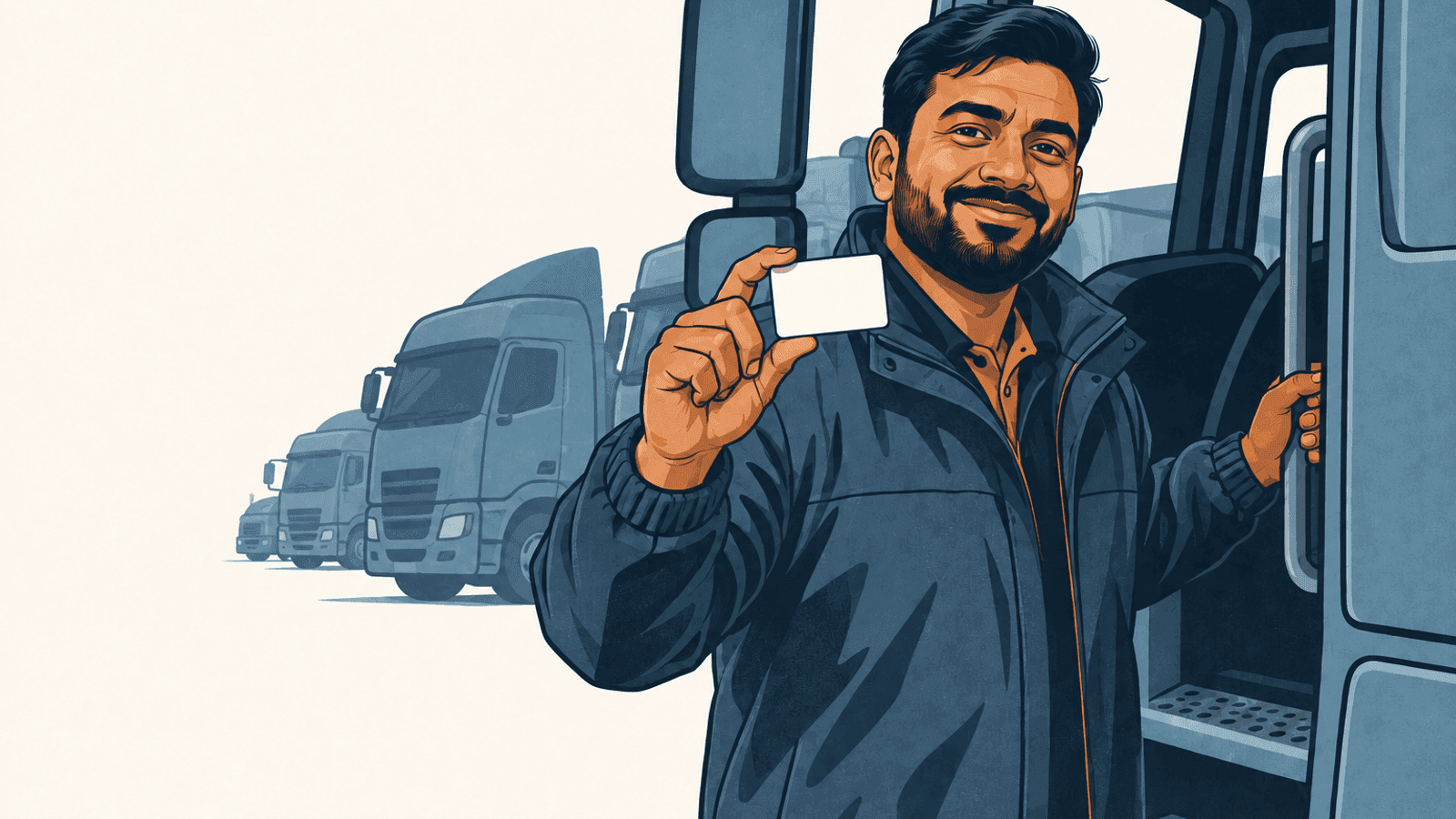
For years the obstacle to hiring non-EU drivers in Germany was circular: you needed a German licence to work, and you needed to be in Germany to get one. Since 2023 there is a route through it. §24a of the Employment Regulation (BeschV) lets a haulier bring in a driver who does not yet hold an EU licence, on the condition that both sides commit to fixing that within a fixed window.
It works. It also fails more often than it should, and always for the same reason.
How the route works
The driver enters on a residence permit tied to a contract with the sponsoring haulier. That contract obliges the driver to obtain the German C/CE licence, the accelerated basic qualification (Code 95) and adequate German language skills — and obliges the employer to organise working time so that this is actually achievable, within fifteen months, extendable once by six months to twenty-one in total.
The Federal Employment Agency must approve the employment, and it checks that pay and conditions match those of comparable German drivers. This is not a light-touch check. A file that offers a non-EU driver less than the going rate does not get approved.
Realistically, allow twelve to twenty weeks from a decision to hire to a driver on German soil, and understand that the driver is not fully productive on arrival — they are working towards the qualification while employed.
The failure mode
Almost every §24a arrangement that goes wrong goes wrong the same way: a vague contract and an under-planned training schedule.
The obligation is mutual. If the fifteen months pass and the driver does not have the licence and the Code 95, that is a problem for both sides — and the most common cause is not a lazy driver. It is an employer who needed the seat filled, put the driver on other duties, never booked the driving school, and discovered in month eleven that the training capacity near the depot is booked out for a quarter.
So the sequence that works is: identify the driving school before the driver travels, agree a training schedule in writing, and roster around it from week one. Treat the qualification as part of the job rather than something that happens in the driver's own time.
The alternative for temporary demand
There is a second route worth knowing about, which is not a permit at all. Drivers and trades lawfully employed by an entity in another member state — Lithuania, in our case — can be posted to a German client under EU posting rules, using the Vander Elst exemption for third-country nationals. No German permit is required.
It is genuinely useful for temporary peaks and it is not a loophole to be casual about: German posting law and minimum-wage rules apply in full, the posting must be notified, and the arrangement has to be a real posting rather than a permanent placement wearing a disguise. We confirm eligibility case by case, and there are cases where the answer is no.
What a German employer should have ready
The job and pay benchmarked against comparable German drivers, because the Federal Employment Agency will benchmark it too. A driving school with confirmed capacity near the depot. A written training plan inside the contract. A realistic view of what the driver can and cannot do in the first months. And someone at the depot who owns the qualification timetable.
Is it worth it?
For a haulier with a persistent shortage, yes — the route exists precisely because the shortage is real, and a driver who completes the qualification is a driver with an EU licence and a reason to stay with the employer who paid for it.
For a company that wants people next month, no. It is a fifteen-month investment that starts with a twelve-to-twenty-week wait.
If you are weighing it up, send us the depot location and the pattern of work and we will tell you honestly whether §24a or a posting arrangement fits better.
More from the blog

Getting a welder's qualification recognised in Germany
German fabricators and shipyards can hire non EU welders. What stops most of them is not the visa — it is recognition. Under the Skilled Immigration Act the…

Family reunification for workers in Lithuania
Ask a driver in his second year in Kaunas what he is thinking about and it is rarely the job. It is whether his wife and children can join him. This is the…

Renewing a residence permit and changing employer in Lithuania
The first permit gets all the attention. The renewal, and the possibility that the worker moves to another employer when it comes round, gets almost none —…