
Family reunification for workers in Lithuania
ManBe Group · 2 September 2026 · 3 min read
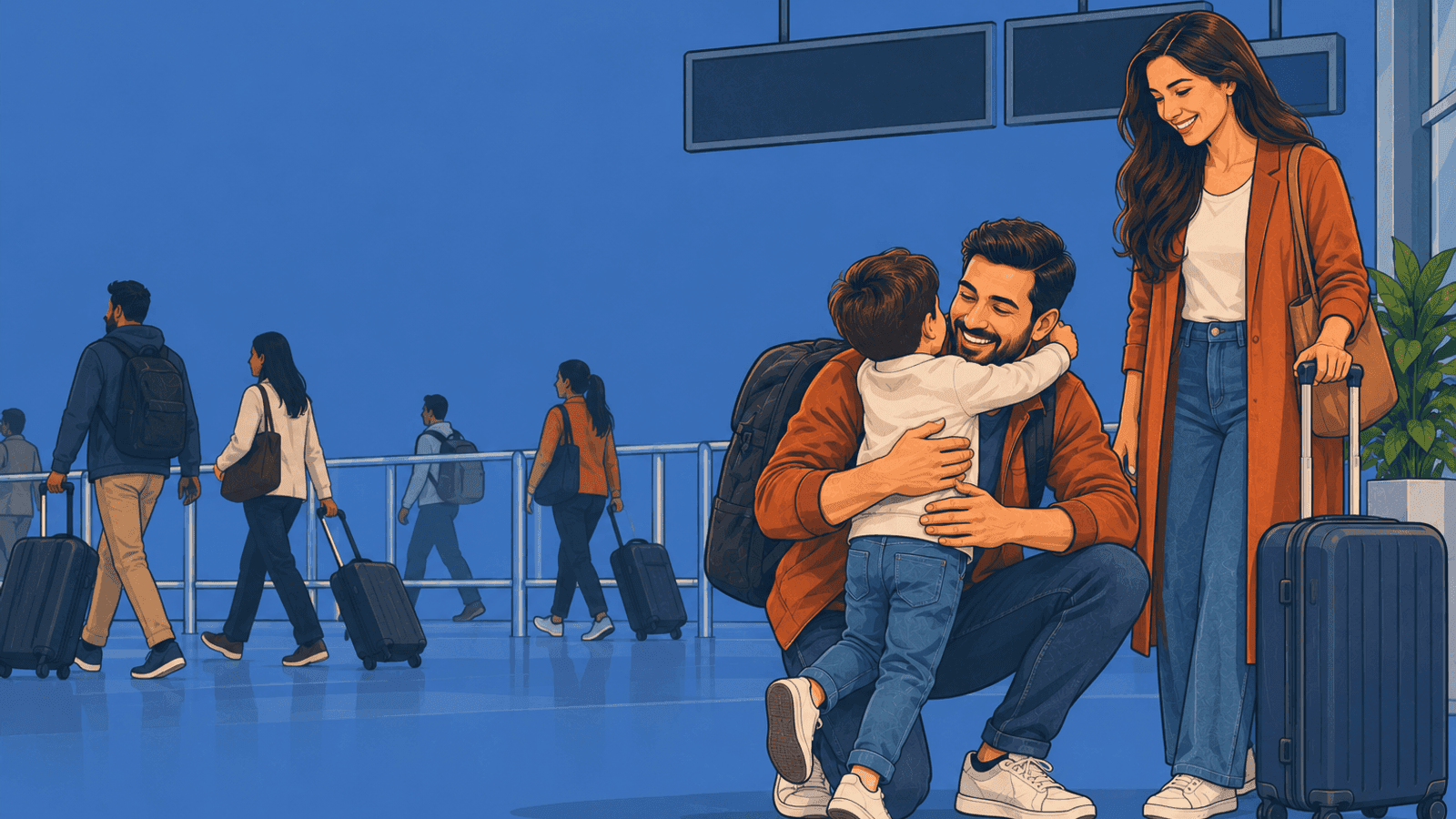
Ask a driver in his second year in Kaunas what he is thinking about and it is rarely the job. It is whether his wife and children can join him. This is the question that decides how long good workers stay in a country, and most employers have never looked into it.
The short answer
Family reunification is possible, but it is not part of the initial application and it is not automatic. It comes later, once the worker holds a residence permit and can meet the conditions — and the conditions are the point.
A worker applying to bring immediate family generally has to show that they have lived in Lithuania lawfully for a qualifying period, that they have accommodation meeting the required standard for the number of people who will live in it, that they have income sufficient to support the family without recourse to public support, and that they hold health insurance cover. Family members then apply for their own residence permits on the basis of reunification.
Because these thresholds change and the details matter enormously to the individual, this article deliberately does not quote figures. Anyone actually applying should check the current requirements with the Migration Department, and ideally take advice.
Why the accommodation condition matters most
The condition that most often blocks an otherwise eligible worker is housing. Employer-provided accommodation is typically a shared room, which is fine for a single worker and does not meet the standard for a family. So the practical sequence is: worker arrives, works, saves, moves out of shared accommodation into a rented flat, and only then is in a position to apply.
That takes time, and it is the real reason reunification usually happens in the second year rather than the first.
Why employers should care
There is a straightforward business case here, and it is not sentimental.
A worker whose family is four thousand kilometres away is a worker with a countdown running. However good the job, at some point the pull home wins. A worker whose family is in Lithuania is settled, is not planning an exit, and has every reason to stay with an employer who helped make it possible.
The employers with the best retention among third-country workers, in our experience, are the ones who treat reunification as a normal step rather than an inconvenience: they help with the paperwork the worker needs from them, they are relaxed about the move out of company housing, and they say at interview that this is a job someone can build a life around.
That last point costs nothing and it is a genuine differentiator in a market where every haulier is offering roughly the same wage.
What the worker needs from the employer
Usually four things: an employment certificate confirming the job and salary, payslips for the relevant period, confirmation of the contract's duration, and flexibility for the appointments the process requires. None of it is onerous. What matters is that it arrives promptly — a request that sits in an inbox for three weeks can push an application past a deadline.
For candidates considering the move
Go in with a realistic timeline. The first year is about establishing yourself: the permit, the licence, the job, the savings and eventually your own tenancy. Reunification comes after that, and it comes faster if you plan for it from the start — keep your documents in order, keep your employment continuous, and ask early what your employer can provide.
Ask us before you travel if family reunification is part of your plan. It should not change whether you come, but it may change how you approach the first two years — and it is better discussed at the start than discovered later.
More from the blog
Getting a welder's qualification recognised in Germany
German fabricators and shipyards can hire non EU welders. What stops most of them is not the visa — it is recognition. Under the Skilled Immigration Act the…

Renewing a residence permit and changing employer in Lithuania
The first permit gets all the attention. The renewal, and the possibility that the worker moves to another employer when it comes round, gets almost none —…
Posting a worker from Lithuania to a client in another EU country
Some EU countries are close to impossible to hire blue collar workers into directly. The Netherlands is the clearest example: the GVVA single permit requires a…